- Products
- Overview
- Product Forms / Packaging
- Plant Health
- Wastewater
- Livestock Waste
- Aquaculture & Ponds
- Petroleum & Grease
- Case Studies
- Buy
- About
- Contact

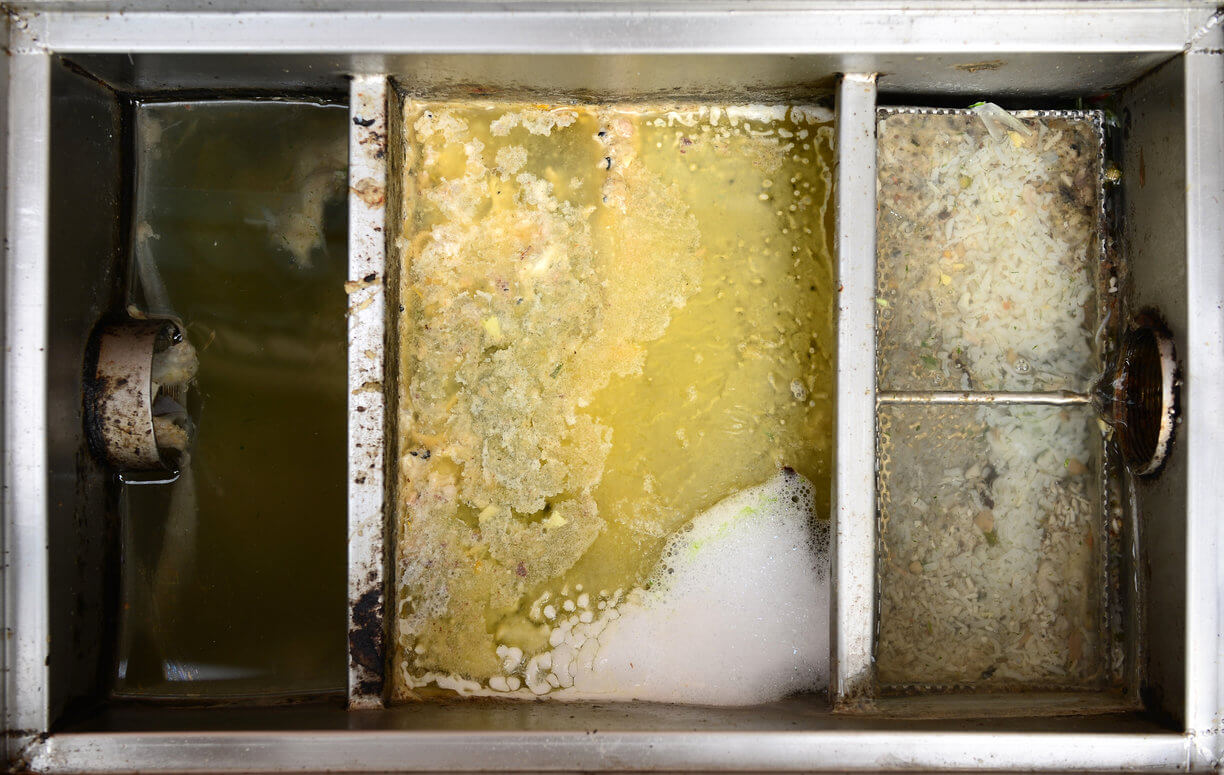
Grease Treat (GT) is a high-CFU bacteria treatment for fats, oils, and grease (FOG) in grease traps, lift stations, and drain lines. Its facultative anaerobic strains stay active in the low-pH, high-grease conditions where standard wastewater bacteria stall, and they digest grease at the source instead of letting it cake, clog, and turn septic.
The numbers above are real field results. At a high-load commercial grease trap in Wisconsin, a GT program cut BOD and TSS about 91% and dropped pump-out cost from $1,029 to about $20 per service, because the grease is digested in the trap rather than pumped out.
GT strains are selected for high lipase and esterase activity and strong biosurfactant production, so they emulsify and break down FOG fast. By digesting volatile fatty acids (VFAs), GT controls odor at the source and limits the hydrogen sulfide (H2S) that drives corrosion. It performs across food service grease traps, municipal lift stations, and industrial wastewater systems.
Key Benefits:
Grease Treat (GT) is a high-CFU, spore-forming Bacillus blend built for fats, oils, and grease (FOG) in grease traps, lift stations, and wastewater systems. Because the strains are facultative anaerobes, they stay active in the aerobic, anoxic, and oxygen-limited pockets of wet wells, force mains, and trap interiors, so treatment holds up in real conditions. They are selected for high lipase and esterase output and strong biosurfactant secretion, which emulsifies grease and speeds digestion, and they digest volatile fatty acids (VFAs) to control odor at the source and limit the hydrogen sulfide (H2S) behind corrosion. GT works as grease trap bacteria, lift station bacteria, and FOG treatment bacteria across food service, municipal, and industrial systems.
At a high-load commercial grease trap in Wisconsin, a GT maintenance program was tracked from the start of dosing through 300 days.
| Time | BOD (mg/L) | TSS (mg/L) | Pumping cost |
|---|---|---|---|
| Start | 2,328 | 2,660 | $1,029.00 |
| 30 days | 1,086 | 568 | $376.41 |
| 60 days | 651 | 289 | $190.61 |
| 150 days | 600 | 236 | $185.44 |
| 300 days | Under 200 | Under 230 | $20.00 |
By 30 days BOD had roughly halved and TSS had dropped from 2,660 to 568 mg/L. By 300 days BOD was under 200 mg/L and TSS under 230 mg/L, both about 91% lower, and pump-out cost had fallen from $1,029 to about $20 per service. Digesting the FOG in the trap turned its biggest recurring expense into a minor one. In a separate case in Jakarta, a restaurant grease line that backed up 2 to 3 times a week was cleared of hardened FOG in about 14 days, and a Colombia restaurant held its trap clean and odor-free on one tablet a month for 90 days. Read the Wisconsin grease trap, Indonesia drain line, and Colombia restaurant case studies.
GT is built for the FOG-heavy traps and interceptors in restaurants, commercial kitchens, cafeterias, food courts, and food processors, where grease clogs and smells. It keeps the trap cleaner between services and cuts the pumping and maintenance those kitchens pay for.
In lift stations and collection systems, GT digests grease in wet wells, pump stations, force mains, and downstream lines that carry FOG. That reduces accumulation, clogging, and pump downtime, and it controls the odor and corrosion that grease carryover drives through the system.
GT works through municipal treatment units, headworks, equalization basins, aeration tanks, clarifiers, DAF and IGF units, and sludge handling. It also handles FOG-heavy industrial streams from meat, protein, rendering, dairy, beverage, brewery, and distillery operations.
GT is chosen for fast, consistent fats, oils, and grease digestion.
GT reduces odor and corrosion risk in FOG-heavy systems, in grease traps and lift stations alike.
Better FOG removal means leaner operations.
GT targets fats, oils, and grease, the volatile fatty acids and hydrogen sulfide behind odor and corrosion hotspots, and the recurring FOG accumulations that clog drain and waste lines where biological maintenance is required.
GT is a biological grease trap treatment, not a caustic or acidic drain cleaner. It works on the organic grease and solids themselves, digesting FOG in place, so it will not attack plumbing the way harsh chemical cleaners can. That makes it a safe fit for ongoing grease trap, lift station, and drain line maintenance.
GT ships in powder, liquid, slow-release blocks, and tablets, so it fits a single restaurant trap or a municipal wet well. The dosing guide and wastewater-plant rates are in the Application Guidelines on this page. A short knockdown dose is used first on a heavily fouled trap or line, then a lower maintenance dose holds it clear.
GT is available in bulk, wholesale, OEM, and private-label quantities across powder, liquid, block, and tablet forms, with domestic and international shipping. It is made in the USA under strict quality control with lot traceability and CFU verification. Tell us your trap or lift station size and your current pumping schedule, and we will recommend a starting dose and send a quote.
Concentration (CFU/g):
Custom concentrations available upon request
Packaging Options:
Shelf-life:
Storage Recommendations:
Powder (using 50B CFU/g)
Notes: 1) best to start treatment after a clean out has occurred 2) apply product to furthest upstream location of the challenged location during periods of low flow 3) avoid dosing when hot water and sanitizer lines are in use 4) for high loading or if considerably fouled before treatment start, consider higher than recommended dosing.
Grease Interceptors:
Blocks
One 900g (2lb) block treats ~1,500m3 (1.5 million liters) of water and slowly dissolves over ~30 days. Dissolve rate fluctuates with water temperature and flow rate.
Tabs
One 85g (3oz) tab treats ~150m3 (150,000 liters) of water and slowly dissolves over ~30 days. Dissolve rate fluctuates with water temperature and flow rate.
Bio-Based Cleaners and Degreasers
Usage rates vary. Reference dose:
Grease Treat (GT) is a high-CFU bacteria treatment for fats, oils, and grease (FOG) in grease traps, lift stations, and drain lines. Its facultative anaerobic strains thrive in the low-pH, oxygen-limited conditions where standard products stall, producing lipase and esterase enzymes plus biosurfactants that emulsify and digest grease at the source and cut the odor that comes with it.
Not well. Standard wastewater blends are not built for heavy grease loads and lose effectiveness in the acidic, low-oxygen conditions of grease traps and lift stations. Grease Treat (GT) is formulated for FOG-heavy systems, with strains that target grease, volatile fatty acids (VFAs), and odor compounds, so it keeps working where general-purpose bacteria give up.
Bacteria treatment keeps grease systems stable through rapid FOG digestion from high lipase and esterase activity, biosurfactant production for better emulsification, and VFA digestion that cuts odor and limits hydrogen sulfide (H2S). Grease Treat (GT) is a facultative anaerobe, so it stays active in both aerobic and low-oxygen zones.
Treat the trap with grease-digesting bacteria rather than masking it. Most grease trap and lift station smell comes from volatile fatty acids and hydrogen sulfide as trapped grease turns septic. Grease Treat (GT) digests those compounds at the source, which lowers odor complaints and helps prevent corrosion in wet wells, pumps, and traps.
Digest the grease in the trap instead of letting it accumulate, so you pump and haul less often. At a Wisconsin commercial grease trap, Grease Treat (GT) cut pump-out cost from about $1,029 to roughly $20 per service as solids stopped building up, alongside about 91% lower BOD and TSS. It also lowers aeration demand and sludge yield in treatment plants.
Yes. Grease Treat (GT) is effective in municipal lift stations, sewer collection systems, and headworks, and in industrial streams loaded with grease, such as food processing, slaughterhouse, rendering, dairy, and beverage operations.
Look for a blend built for FOG-heavy food service traps that clog and smell. Grease Treat (GT) digests grease efficiently, keeping traps cleaner and cutting pumping and maintenance. A Colombia restaurant ran its trap clean and odor-free for 90 days on one GT tablet a month.
It matters. Grease Treat (GT) is live bacteria, not a bottle of enzymes. The bacteria produce their own lipase and esterase enzymes continuously and keep multiplying as they digest grease, so they keep working over time. A dose of enzymes alone is used up and stops, while GT's facultative strains stay active in both the aerobic and low-oxygen zones of traps and lift stations.
Keep grease from solidifying in the first place. Grease Treat (GT) continuously digests fats, oils, and grease before they build up, which prevents the clogs and backups that cause emergency pumping. At a Jakarta restaurant, a line that backed up 2 to 3 times a week was cleared of hardened FOG in about 14 days and stayed open on a maintenance dose.
A biological treatment can dissolve FOG-related drain blockages. Grease Treat (GT) bacteria digest accumulated grease in drain and waste lines and restore flow. That cuts the need for harsh chemicals or mechanical cleaning.
The most cost-effective grease trap maintenance is preventive. Grease Treat (GT) breaks grease down before it hardens and accumulates, and regular dosing controls odor, reduces pumping frequency, and keeps traps and lines clean. That is what turned a $1,029 pump-out into about $20 at the Wisconsin trap over 300 days.
Dose the wet well with grease-digesting bacteria. Grease Treat (GT) includes strains suited to wet wells, pumps, and force mains, where it digests grease at the source to reduce accumulation, prevent clogging, and minimize pump downtime.
Remove the food source behind both. Grease Treat (GT) digests the volatile fatty acids (VFAs) and limits the hydrogen sulfide (H2S) that drive lift station odor and corrosion. That cuts nuisance smell and protects pumps and infrastructure.
Dose by trap volume. As a guide, a trap up to 500 gallons gets about 5 g/day for the first 3 days, then 1 to 2 g/day for maintenance, and grease interceptors are dosed higher. Add the product at the furthest upstream point during low flow, and start after a cleanout for best results. The full dosing guide and wastewater-plant rates are in the Application Guidelines on this page.
Grease Treat (GT) is supplied as powder in 22 lb (10 kg) and 44 lb (20 kg) pails and 340 lb (155 kg) drums, liquid in quarts, liters, gallons, and 55-gallon (208 L) drums, slow-release blocks, and tablets for traps, drains, and smaller systems.
Grease Treat (GT) is a biological grease trap treatment, not a caustic or acidic chemical cleaner. It digests the organic grease and solids themselves rather than burning through them, so it will not attack plumbing and it keeps working between services. That makes it a safe fit for ongoing grease trap, lift station, and drain line maintenance.
Place them directly in the grease trap, lift station, or area of grease accumulation where there is good water circulation. Positioning near the inlet, pumps, or turbulence spreads the microbes evenly for consistent FOG digestion and odor control.
Yes. Grease Treat (GT) uses all-natural, non-GMO Bacillus strains that are safe for plumbing, wastewater infrastructure, treatment processes, and downstream ecosystems when used as directed.
Yes. Grease Treat (GT) is available in bulk and wholesale for municipalities, industrial facilities, food service providers, and wastewater contractors, with custom CFU concentrations and packaging on request.
Yes. Grease Treat (GT) is offered in private-label, OEM, and distributor-ready formats across powder, liquid, block, and tablet forms.
You can buy Grease Treat (GT) directly from us in bulk, wholesale, OEM, and private-label formats, with domestic and international shipping. Request a sample to trial it on your own trap or lift station.
Contact our sales team for pricing or product information. We work directly with WWTP operators, food service facilities, municipalities, industrial users, OEMs, and distributors.