
- Products
- Overview
- Product Forms / Packaging
- Plant Health
- Wastewater
- Livestock Waste
- Aquaculture & Ponds
- Petroleum & Grease
- Case Studies
- Buy
- About
- Contact

In a China green pepper trial on poor soil with no fertilizer, Multi-Tricho multi-strain Trichoderma raised yield 147%, from 63 grams per plant in the untreated control to 156 grams per plant, alongside visibly stronger roots and thicker foliage.
| Metric | Untreated control | Multi-Tricho treated |
|---|---|---|
| Yield per plant | 63 g | 156 g (+147%) |
| Fertilizer used | None | None |
| Root mass | Reduced | Significantly greater |
| Foliage and growth | Thin, slow | Thicker, stronger |
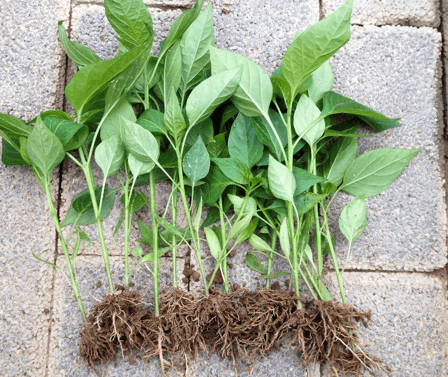
Untreated control on poor soil with no fertilizer: thin foliage, weak roots, and 63 grams of green peppers per plant at harvest.

Same poor soil and no fertilizer, plus Multi-Tricho multi-strain Trichoderma: thicker leaves, greater root mass, and 156 grams per plant, a 147% yield gain.
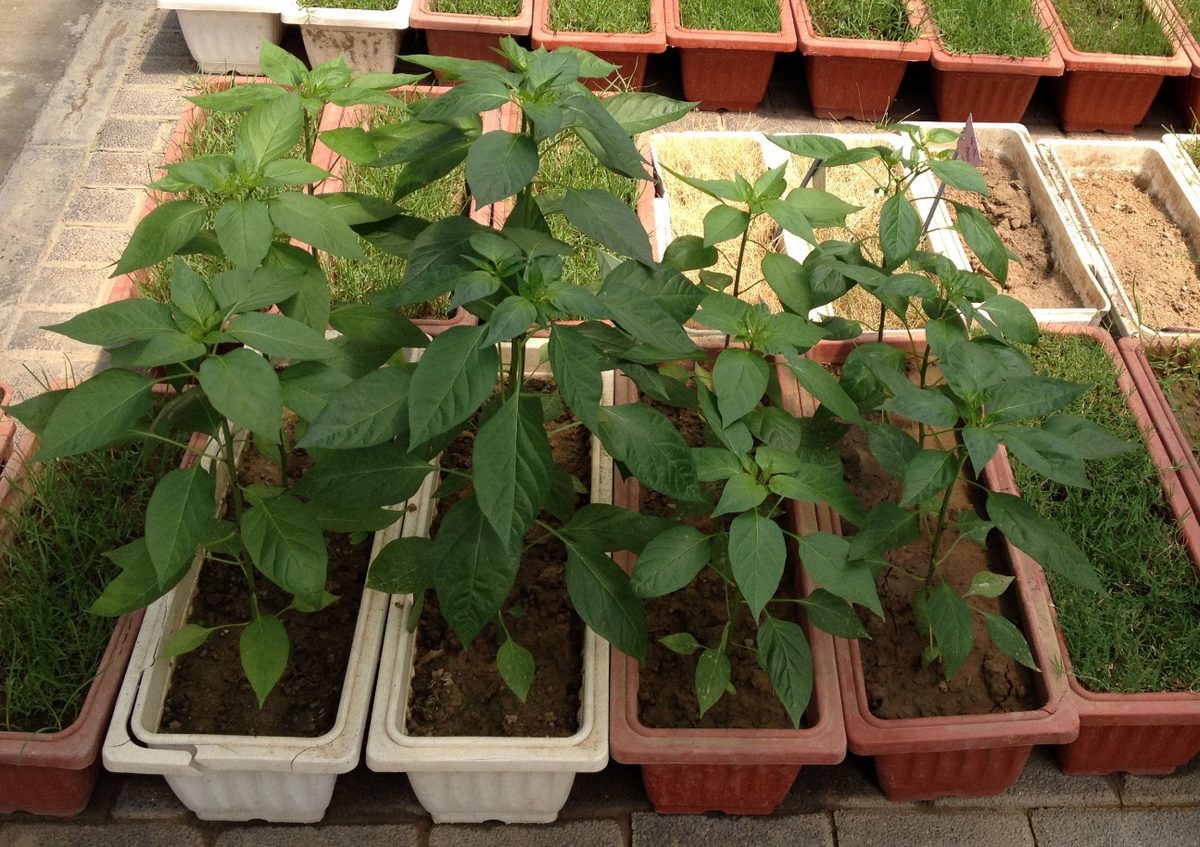
At two months, the Multi-Tricho plants on the left stand taller and fuller than the untreated control on the right, grown side by side in the same poor soil with no fertilizer.
In this trial it did. Green pepper plants treated with a multi-strain Trichoderma inoculant produced 156 grams per plant versus 63 grams for untreated controls, a 147% yield increase, with no fertilizer on poor soil. Trichoderma builds yield indirectly, by colonizing the root zone, improving nutrient cycling, and strengthening root systems so plants capture more of the nutrition already in the soil.
It is a soil inoculant that delivers several complementary Trichoderma species instead of one. Multi-Tricho combines Trichoderma harzianum, Trichoderma longibrachiatum, and Trichoderma asperellum, beneficial soil fungi that colonize roots and the surrounding rhizosphere. Using multiple strains widens the range of soils and conditions the inoculant performs well in.
Trichoderma fungi colonize root surfaces and the rhizosphere, where they produce enzymes and metabolites that recycle nutrients and break down organic matter. They compete for space and resources in the root zone and support a balanced soil microbiome, which strengthens root development and helps plants establish and hold up under stress.
This trial applied no fertilizer at all, and the treated plants still delivered a 147% yield gain on poor soil. Trichoderma is not a nutrient source itself; it improves how efficiently plants use the nutrients already in the soil, which lowers fertilizer dependence and suits organic and low-input programs. On richer soils growers typically pair it with a reduced fertility program.
Trichoderma harzianum is one of the most widely used beneficial soil fungi in agriculture, valued for root colonization and rhizosphere activity. In Multi-Tricho it works alongside Trichoderma longibrachiatum and Trichoderma asperellum, and the blend produced stronger roots and a large yield gain on green peppers in this trial.
In this trial Multi-Tricho was spread evenly across the soil surface, watered in, and reapplied once a month through the season. Applying to moist soil and keeping the root zone active helps the fungi establish. Rates scale from pots and greenhouse beds up to open-field production.
Yes. Multi-Tricho is OMRI Listed, so it fits certified organic and regenerative systems. It uses naturally occurring Trichoderma strains and integrates with organic fertility programs, which makes it a practical biological input for organic pepper and vegetable production.
Trichoderma inoculants support a wide range of crops, including peppers and other vegetables, fruit, row crops, and turf. The benefit is largest on marginal or low-fertility soils and in stress conditions, where stronger roots and better nutrient cycling translate most directly into growth and yield.
This is the product behind these results. Open its page for full specifications, packaging, and dosing rates.
Tell us your system size and current numbers. We will recommend a starting dose and send a quote.
Request a Quote


