
- Products
- Overview
- Product Forms / Packaging
- Plant Health
- Wastewater
- Livestock Waste
- Aquaculture & Ponds
- Petroleum & Grease
- Case Studies
- Buy
- About
- Contact

On an American golf course, Thatch Treat cut the thatch layer from 3 inches to 0.5 inches in 40 days, an 83% reduction, with no verticutting and no downtime, while turf color and surface firmness visibly improved.
| Metric | Before | During | After (40 days) |
|---|---|---|---|
| Thatch depth | ~3 inches | Softening | 0.5 inches (83% lower) |
| Water infiltration | Restricted | Improving | Restored |
| Surface firmness and roll | Inconsistent | Improving | Improved |
| Method | Mechanical dethatching considered | Biological dosing | No verticutting, no downtime |

Day 0: about three inches of dense thatch across the turf, blocking water and air and leaving the surface spongy with inconsistent ball roll.
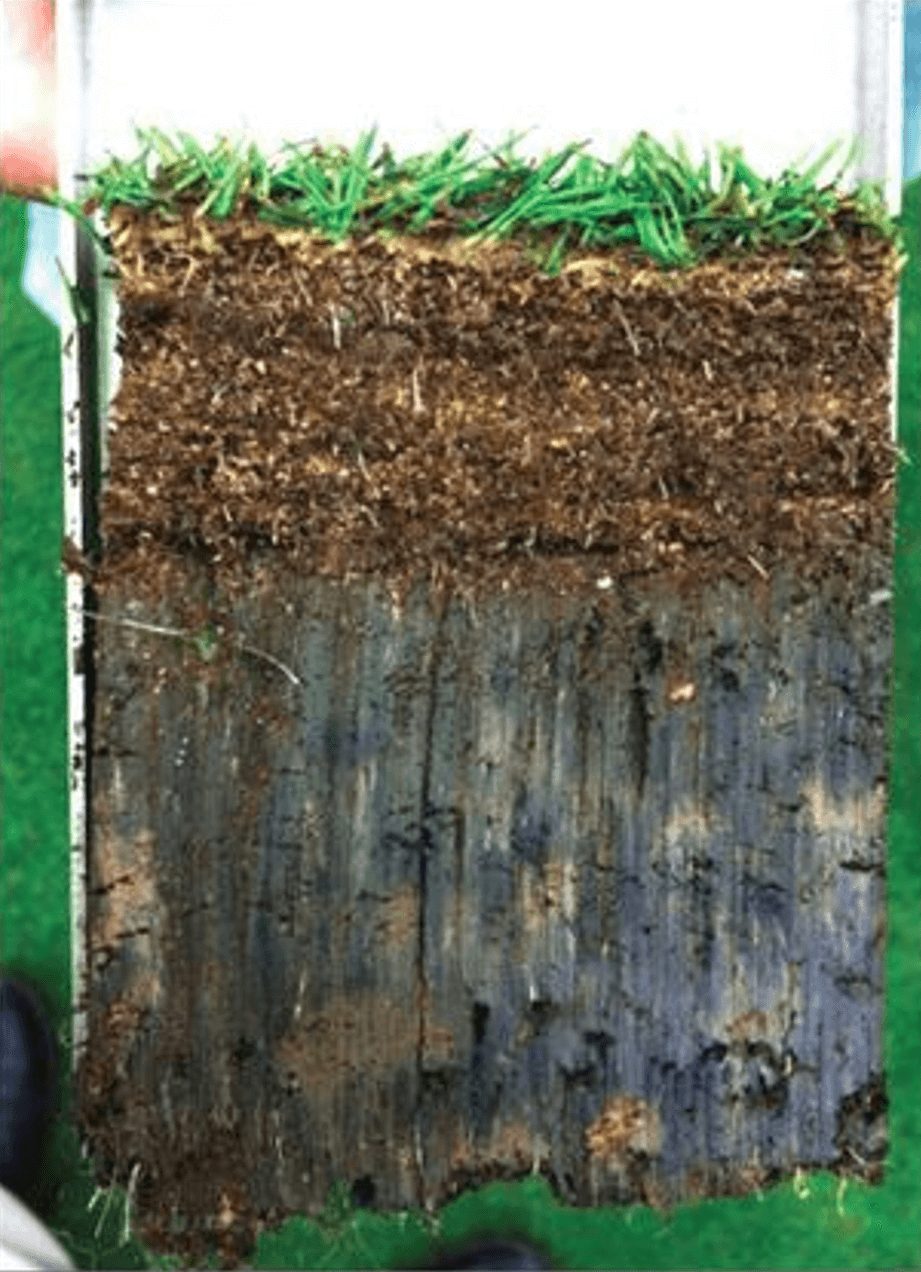
In treatment: Thatch Treat enzymes soften and digest the fibrous thatch mat in place, reopening the profile to water, air, and roots with no verticutting.
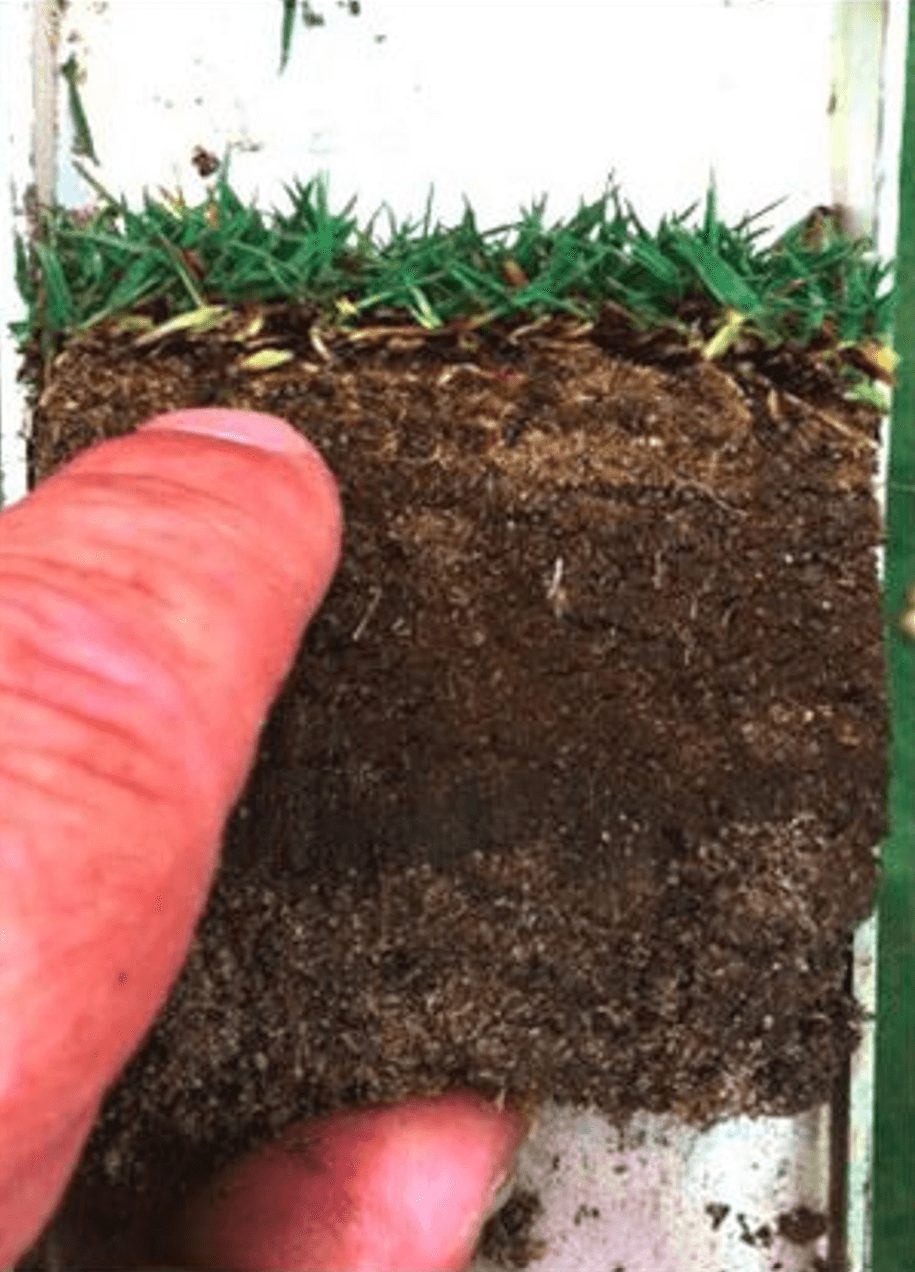
Day 40: thatch down to 0.5 inches, an 83% reduction, with greener, firmer turf and better infiltration, and no mechanical dethatching used.
You let soil biology do it. Instead of verticutting or power raking, a biological thatch program uses bacteria and fungi that produce lignocellulose-degrading enzymes to break the thatch mat down in place. In this golf course trial that approach reduced the thatch layer from three inches to 0.5 inches in 40 days, an 83% reduction, with no mechanical dethatching and no turf taken out of play.
Mechanical dethatching clears thatch in one pass but scars the surface and forces downtime. A microbial thatch remover works through the whole profile at once, digesting the fibrous organic layer rather than tearing it out. Here the full 83% reduction landed in 40 days while the course stayed open, which is often the more practical route for high-value turf that cannot be closed.
Thatch is the layer of dead stems, roots, and organic matter that collects between the green surface and the soil when it accumulates faster than soil microbes can decompose it. Heavy growth, intensive management, and low biological activity all speed it up. Once the mat gets thick it blocks water, air, and nutrients from the rootzone and leaves the surface spongy.
A thick thatch layer restricts infiltration and gas exchange, so water pools, roots stay shallow, and the surface loses firmness and consistent ball roll. On this course the three-inch mat was compromising playability. Bringing it down to 0.5 inches restored firmness, infiltration, and turf color without disrupting play.
Yes. This trial used no verticutting and no coring and still cut thatch 83% in 40 days. Enzyme-producing bacteria and fungi softened and digested the mat biologically, which avoids the surface disruption, cleanup, and downtime that mechanical methods bring. Many turf managers run a biological program between topdressings to keep thatch in check continuously.
In this case the thatch layer dropped from three inches to 0.5 inches over 40 days of treatment. Timing depends on starting thatch depth, temperature, and turf activity, since the process is driven by living microbes. Warmer soils and active turf speed decomposition, and results build gradually rather than in a single pass.
It is designed for exactly those surfaces. The bacteria and fungi target thatch, not the turf, and the program is compatible with IPM and BMP management. It works on greens, tees, fairways, sports fields, and home lawns, and keeps surfaces playable throughout treatment.
Thatch Treat is a high-CFU biological thatch remover of bacteria and fungi that produce cellulase, xylanase, and laccase enzymes to break down lignin, cellulose, and hemicellulose in the thatch layer. It is applied to the turf surface on a program between topdressings, with no verticutting required, and reduced thatch 83% in this golf course trial.
This is the product behind these results. Open its page for full specifications, packaging, and dosing rates.
Tell us your system size and current numbers. We will recommend a starting dose and send a quote.
Request a Quote


