
- Products
- Overview
- Product Forms / Packaging
- Plant Health
- Wastewater
- Livestock Waste
- Aquaculture & Ponds
- Petroleum & Grease
- Case Studies
- Buy
- About
- Contact

At an industrial site with petroleum-contaminated soil, an on-site windrow program using Petroleum Treat cut total petroleum hydrocarbons (TPH, C10 to C40) from about 20,000 to 650 ppm, a 97% reduction, dropped oil and grease from 1,100 to 45 mg/kg (96% lower), and returned the treated soil to the site with no off-site hauling.
| Metric | Before | After |
|---|---|---|
| Soil TPH (C10 to C40) | ~20,000 ppm | 650 ppm (97% lower) |
| Oil and grease | 1,100 mg/kg | 45 mg/kg (96% lower) |
| Porewater sulfate | 420 mg/L | 210 mg/L (50% lower) |
| Staining and odor | Heavy staining and odor | Eliminated, greatly reduced |
| Disposal method | Off-site hauling | On-site windrow, soil returned |

Before: the site soil carried about 20,000 ppm TPH (C10 to C40) and 1,100 mg/kg oil and grease, with visible petroleum staining and strong hydrocarbon odor.
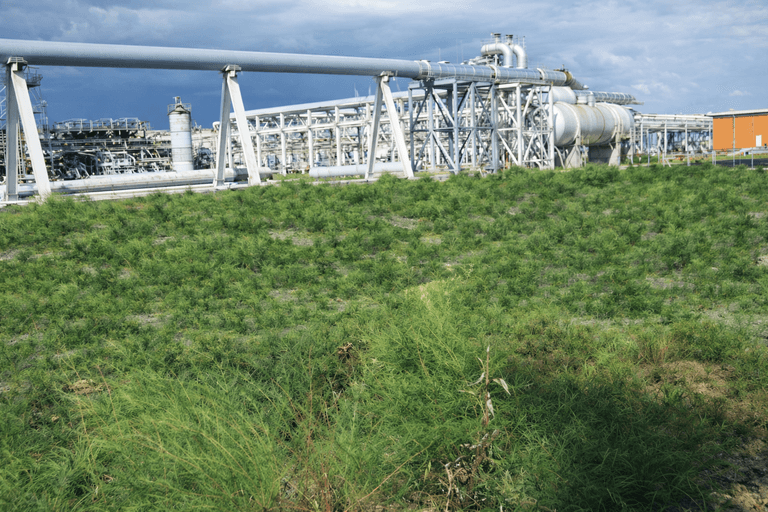
After: on-site windrow treatment with Petroleum Treat cut soil TPH 97% to 650 ppm and oil and grease to 45 mg/kg, with staining gone and the soil returned to the site.
On-site windrow bioremediation treats petroleum contaminated soil in place. The soil is formed into windrows and dosed with high-CFU petroleum hydrocarbon degrading bacteria that break the hydrocarbons down. In this project, soil TPH fell 97%, from about 20,000 ppm to 650 ppm, and the treated soil was returned to the site.
Windrow bioremediation forms contaminated soil into long rows that are dosed with hydrocarbon degrading bacteria and turned regularly to keep them aerated and active. It is a low-cost, on-site way to reduce total petroleum hydrocarbons (TPH) without trucking soil to a landfill.
In this project, on-site treatment cut soil TPH (C10 to C40) from about 20,000 ppm to 650 ppm, a 97% reduction, and oil and grease from 1,100 mg/kg to 45 mg/kg, a 96% reduction, while porewater sulfate dropped by roughly half.
Yes. Because the soil is treated in windrows on site, there is no excavation to a disposal facility. Once TPH came down, the remediated soil was returned to its original location, removing the cost, trucking, and liability of off-site disposal.
They do when dosed and aerated properly. The blend used here targets aliphatics, aromatics, and heavier petroleum distillates, and it brought long-term contamination at roughly 20,000 ppm TPH down to 650 ppm in a controlled windrow program.
Petroleum Treat (PT) is mixed into the contaminated soil as the windrows are built, then reapplied as the rows are turned so the bacteria stay active. It comes in liquid and powder formats for soil and windrow programs.
Environmental remediation contractors, industrial site owners, brownfield developers, and regulatory project managers use on-site bioremediation to bring petroleum contaminated soil into compliance while avoiding the expense of excavation and off-site disposal.
It usually is. Treating soil in place with windrow bioremediation avoids excavation, transport, landfill tipping fees, and clean-fill replacement. Here the entire soil volume was treated and returned to the site instead of being hauled away.
This is the product behind these results. Open its page for full specifications, packaging, and dosing rates.
Tell us your system size and current numbers. We will recommend a starting dose and send a quote.
Request a Quote


