
- Products
- Overview
- Product Forms / Packaging
- Plant Health
- Wastewater
- Livestock Waste
- Aquaculture & Ponds
- Petroleum & Grease
- Case Studies
- Buy
- About
- Contact

Weekly Animal Waste Treat digested a 3 to 4 foot manure mat and crust off a 67,500 cubic yard dairy lagoon, restoring 95% open water and cutting irrigation pumping from 80 hours to 38 hours per cycle, a 52.5% reduction, in 45 days.
| Metric | Before | Day 30 | Day 45 |
|---|---|---|---|
| Pumping time per cycle | 80 hrs | 55 hrs | 38 hrs (52.5% cut) |
| Open water surface | Crusted over | 60 to 70% | 95% |
| Surface crust and manure mat | 3 to 4 ft | Thinning | Cleared |
| Odor | Constant, putrid | Reduced | Eliminated |
| Scum, bottom sludge, TSS | High | Improving | Substantially reduced |
Meadow Rock Dairy Farm ran a 67,500 cubic yard waste lagoon that had stopped behaving like a lagoon. A manure mat and crust 3 to 4 feet thick had built up across the surface, and a putrid odor sat over the site constantly. A crust like that is what happens when solids arrive faster than they break down: fibrous material floats, mats together, and sets up.
Once that layer forms it costs the operation twice. It occupies storage volume that should be holding liquid, and it makes drawing irrigation water off the lagoon slow and expensive. At Meadow Rock a single pump-out was taking 80 hours. That is diesel burned, a pump tied up, and an operator standing over it, every irrigation event, on a schedule the crop sets rather than the farm. The goal was to cut the solids, restore open water, clear the odor, and shorten the pumping window.
Animal Waste Treat went into the lagoon weekly across a 45-day window. AWT is a high-CFU spore-forming Bacillus blend built for livestock and dairy waste, and its strains target exactly what a lagoon crust is made of: fats, proteins, and fibrous solids.
Spore formers matter in this setting. A lagoon swings between aerobic at the surface and anaerobic down in the sludge, temperature moves with the season, and loading is uneven. Spores ride that out and germinate where there is food. Nothing else about the routine changed: no dredging, no added agitation, no equipment, no extra labor, and the lagoon kept taking waste as usual.
Readings were taken at day 30 and again at day 45, tracking open water across the surface, odor, and the hours needed to pump irrigation water off the lagoon, which is the number the operation actually feels.
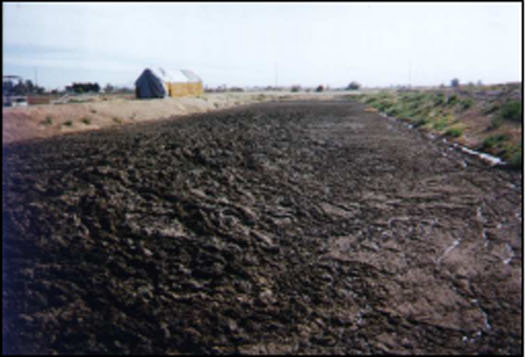
Day 0: a 3 to 4 foot manure mat and crust covered the dairy lagoon surface, odor was constant, and drawing irrigation water took 80 hours.
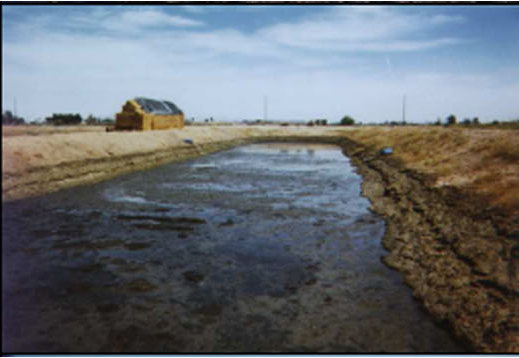
Day 30: weekly AWT had opened 60 to 70% of the lagoon surface, cut the odor, and dropped pumping to 55 hours per cycle.
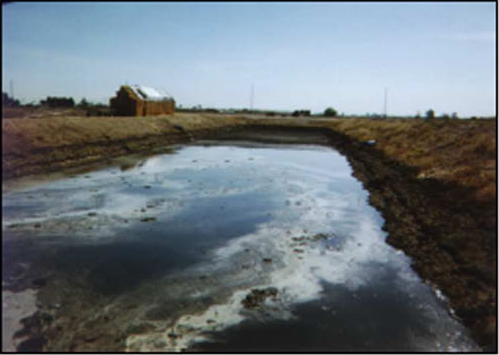
Day 45: 95% open water, odor gone, crust cleared, and pumping down to 38 hours, a 52.5% cut and 42 hours saved per irrigation event.
The lagoon moved well before the endpoint. At day 30, weekly Animal Waste Treat had opened 60 to 70% of the surface, the odor had dropped sharply, and a pump-out took 55 hours instead of 80, a 31% cut at the halfway mark. By day 45 the 3 to 4 foot manure mat and crust was gone and the lagoon held 95% open water. Pumping finished in 38 hours, 42 hours faster than baseline and 52.5% less time per irrigation event. The scum layer, the bottom sludge, and total suspended solids were all substantially reduced, so the lagoon recovered storage volume alongside pumping speed. For an operation irrigating on the crop schedule rather than its own, 42 recovered hours per event is diesel, pump time, and labor that goes straight back into the season.
A manure lagoon is an earthen or lined storage basin that holds liquid manure and washwater from a livestock operation until it can be land applied, usually as irrigation water on the farm's own fields. On dairies it is often called a runoff lagoon or a waste lagoon. It works as long as the solids coming in break down at roughly the rate they arrive. When they do not, they float and mat into a surface crust or settle out as bottom sludge, and the lagoon starts losing both storage volume and pumping speed. The lagoon in this trial held 67,500 cubic yards and carried a crust 3 to 4 feet thick before treatment.
A crust is undigested fibrous solids that floated and matted together. You can break it up mechanically with agitation or a crust buster, which works but has to be repeated because the material is still in the lagoon, or you can digest it, which removes it. Biological treatment adds bacteria that break down the fats, proteins, and fiber the mat is made of. At Meadow Rock Dairy, weekly manure lagoon bacteria cleared a 3 to 4 foot mat and restored 95% open water in 45 days, with 60 to 70% of the surface already open by day 30.
Dredging or pumping sludge out is the mechanical answer and it is the expensive one, because you pay to move and haul material that is mostly water. The biological answer is to digest the solids in place so fewer of them accumulate to begin with. In this trial the scum layer, the bottom sludge, and total suspended solids were all substantially reduced across 45 days with no dredging, no agitation equipment, and no change to how the farm handled waste.
The only honest test is whether something measurable moves. At Meadow Rock the number that moved was pump hours: 80 hours per irrigation cycle at baseline, 55 at day 30, and 38 at day 45. That is 42 hours and 52.5% off a job the farm repeats all season. Results vary with lagoon size, solids loading, temperature, and how long the buildup has been accumulating, so a lagoon that has been crusting for years will not clear as fast as one caught early.
It depends on how thick the mat is, how warm the lagoon is running, and how heavily it is loaded. This lagoon carried a 3 to 4 foot crust and was visibly changing inside 30 days, with 60 to 70% of the surface open and pumping already down from 80 hours to 55. Full clearing to 95% open water took 45 days of weekly application. Cold-weather lagoons move more slowly, because biological activity tracks temperature.
That is usually where an operation notices it first, because agitation and pump-out are the jobs a crust makes worse. Thinner solids move more easily, and the pump moves liquid instead of fighting mat and fiber. Meadow Rock cut a single irrigation pump-out from 80 hours to 38, so 42 hours of pump time, diesel, and operator attention came back on every event.
Yes. Biological treatment works by digesting solids already in the manure, and it does not add anything that changes how the effluent is handled or where it can go. At Meadow Rock, land application was the entire point, since the lagoon was being drawn down for irrigation water. Nutrient content does shift as solids break down, so pull a fresh manure analysis before writing your spreading plan rather than reusing last year's numbers.
Dose is set by lagoon volume, solids loading, and how heavy the buildup is, not by one universal number. Meadow Rock's lagoon held 67,500 cubic yards and was treated weekly across the 45-day window. For enclosed pits and smaller systems, the same biology is also available in a slow-release tablet, Pit Puck, which is dropped in rather than dosed. Send your lagoon volume, livestock type, and roughly how thick the crust or sludge is running, and we will size a rate for it.
This is the product behind these results. Open its page for full specifications, packaging, and dosing rates.
Tell us your system size and current numbers. We will recommend a starting dose and send a quote.
Request a Quote


