Case Study

Chengdu Landfill Leachate Treatment: Ammonia from 850 to 4 mg/L in 26 Hours

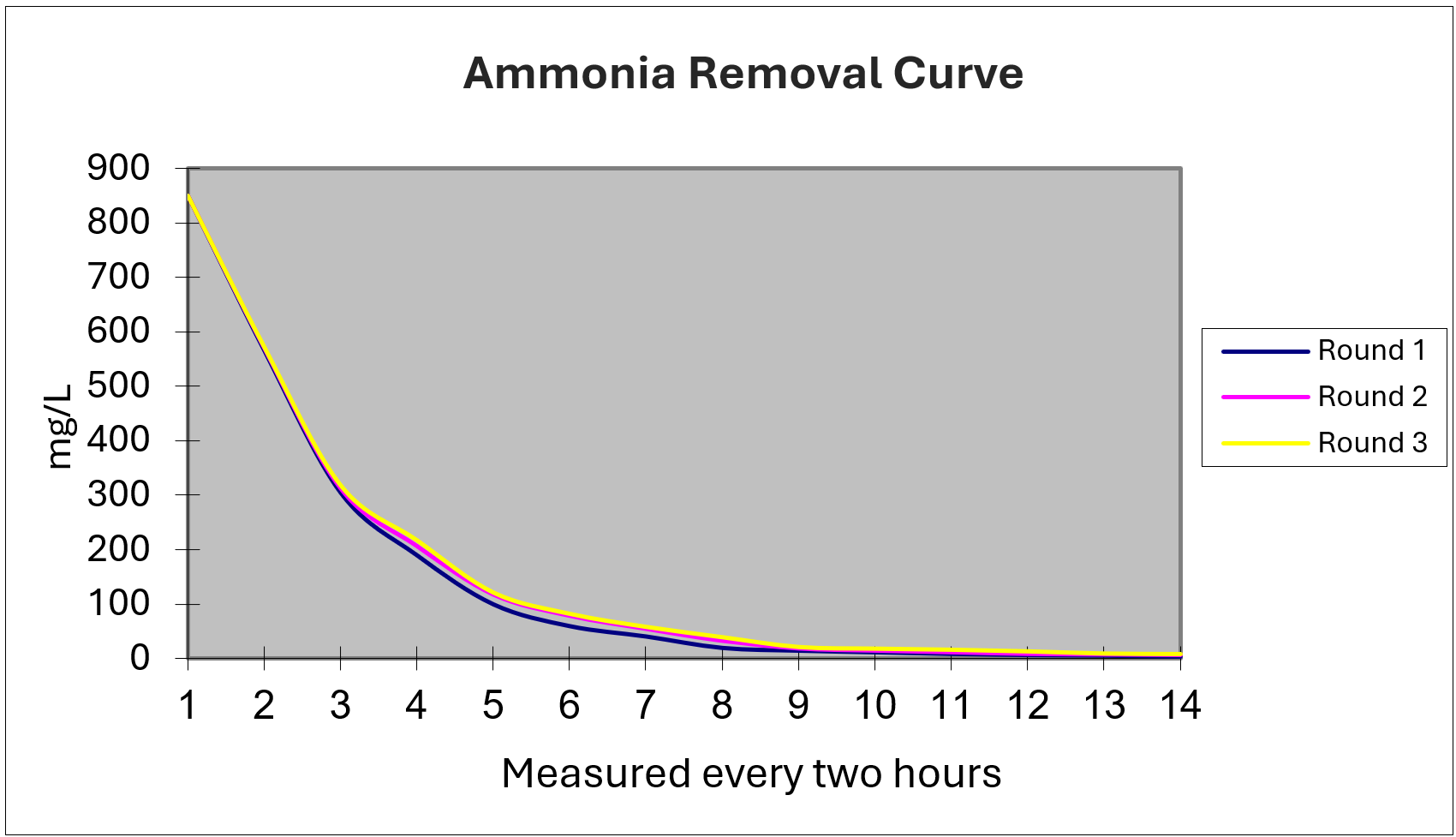
At a rural landfill in Chengdu, China, high-strength leachate ammonia was cut from 850 mg/L to 4 mg/L in 26 hours, a reduction of more than 99%, with a 93% drop in the first 10 hours and odor sharply reduced, using high-CFU ammonia-reducing bacteria.

over 99%
ammonia reduction
26 hours
to 4 mg/L
93%
drop in first 10 hours

Results at a glance

MetricBeforeAfter
Leachate ammonia850 mg/L4 mg/L (over 99% lower)
Ammonia at 10 hours850 mg/L60 mg/L (93% lower)
Time to 4 mg/Ln/a26 hours
OdorSevereSharply reduced

The challenge

A rural landfill near Chengdu, China was struggling with high-strength leachate carrying ammonia as high as 850 mg/L. At that concentration the ammonia drove severe odors, suppressed the leachate's own biological treatability, and made the wastewater hard to stabilize for downstream handling or compliant discharge. Conventional landfill leachate treatment could not bring the ammonia and odor down fast enough under these high-strength conditions. The operator needed an aggressive bioaugmentation program that could take control of the ammonia quickly rather than over days or weeks. The trial set out to test whether a high-CFU blend of heterotrophic ammonia-reducing bacteria could deliver fast, sustained ammonia removal in high-strength landfill leachate where standard biological treatment had fallen short.

What we did

Ammonia Treat (AM), a high-CFU blend of ammonia-reducing bacteria that pairs hyper-ammonia-utilizing strains with denitrifiers, was applied directly to the landfill leachate with aeration to support biological activity. The bacteria established quickly in the high-strength leachate and began consuming ammonia in the matrix rather than requiring the wastewater to be diluted or hauled off. The trial tracked ammonia hour by hour across three replicate rounds to measure how fast and how far a targeted heterotrophic bioaugmentation program could drive ammonia down under real conditions, using the treatment equipment already in place at the site.
This is some text inside of a div block.

This is some text inside of a div block.
Treated landfill leachate after 26 hours of Ammonia Treat dosing: ammonia cut from 850 to 4 mg/L, over 99% lower, with odor sharply reduced.
This is some text inside of a div block.

Treated landfill leachate after 26 hours of Ammonia Treat dosing: ammonia cut from 850 to 4 mg/L, over 99% lower, with odor sharply reduced.

The results

Ammonia fell fast. Within 10 hours, leachate ammonia dropped from 850 mg/L to 60 mg/L, a 93% reduction that immediately improved treatability and cut odor at the leachate pond. By 26 hours, ammonia reached 4 mg/L, a total reduction of more than 99% from the starting concentration, and the result held consistently across three replicate rounds. Instead of the days or weeks conventional treatment would take, the ammonia was under control in about a day. For landfill operators, leachate treatment plants, and waste management facilities fighting high-ammonia leachate, persistent odor, and suppressed biological treatability, this shows what targeted heterotrophic ammonia-reducing bacteria can deliver in hours rather than days.

The data

Leachate ammonia
mg/L
850
4
Over 99% lower, from 850 to 4 mg/L in 26 hours
Ammonia at 10 hours
mg/L
850
60
93% lower in the first 10 hours
This is some text inside of a div block.
Download the complete case study (PDF)

Frequently asked questions

How do you treat landfill leachate with high ammonia?

High-strength leachate ammonia responds fast to targeted bioaugmentation. Dosing a high-CFU blend of ammonia-reducing bacteria directly into the leachate, with aeration, lets the bacteria consume the ammonia in place. In this Chengdu landfill trial, leachate ammonia fell from 850 mg/L to 4 mg/L, over 99% lower, in 26 hours.

How fast can bioaugmentation reduce ammonia in landfill leachate?

Much faster than conventional treatment. Here ammonia dropped 93% in the first 10 hours, from 850 mg/L to 60 mg/L, and reached 4 mg/L by 26 hours. The ammonia was under control in about a day rather than the days or weeks standard biological treatment can take.

What causes high ammonia in landfill leachate?

As buried waste breaks down, nitrogen-rich material releases ammonia into the leachate, and high-strength leachate can carry ammonia in the hundreds of mg/L. That ammonia drives odor and suppresses the leachate's own biological treatability, making it hard to stabilize for discharge.

Can ammonia-reducing bacteria handle high-strength leachate?

Yes. The blend pairs hyper-ammonia-utilizing strains with denitrifiers, so it establishes and works even in high-strength leachate where conventional blends stall. In this trial it drove ammonia from 850 mg/L to single digits and held that result across three replicate rounds.

Does treating leachate ammonia also reduce odor?

Yes. Ammonia is a major source of leachate odor, so cutting it lowers the smell directly. As ammonia dropped through the first hours of treatment, odor intensity at the leachate pond fell sharply.

How is Ammonia Treat applied to landfill leachate?

Ammonia Treat (AM) is a powder dosed directly into the leachate with aeration to keep the bacteria active. It works across aerobic and anaerobic conditions and a wide pH and temperature range, so it fits existing leachate ponds and treatment systems.

What facilities use ammonia-reducing bacteria for leachate?

Landfill operators, leachate treatment plants, and waste management facilities use ammonia-reducing bacteria to bring high-ammonia leachate into a treatable, lower-odor state. The same biology also serves municipal and industrial wastewater, animal waste systems, and aquaculture ammonia control.

How much can ammonia be reduced in landfill leachate?

In this high-strength leachate, ammonia was reduced by more than 99%, from 850 mg/L to 4 mg/L. The exact result depends on the leachate and dosing, but the trial shows deep reduction is achievable quickly with targeted bioaugmentation.

ammonia-treat

Product used in this trial

This is the product behind these results. Open its page for full specifications, packaging, and dosing rates.

Have a lagoon or waste system with the same problem?

Tell us your system size and current numbers. We will recommend a starting dose and send a quote.

Request a Quote