- Products
- Overview
- Product Forms / Packaging
- Plant Health
- Wastewater
- Livestock Waste
- Aquaculture & Ponds
- Petroleum & Grease
- Case Studies
- Buy
- About
- Contact

Crop Residue Decomposer (CRD) is a bacterial and fungal blend that breaks down corn stover, wheat and rice straw, soybean stubble, and other post-harvest residue in the field. Nine strains of Bacillus, Trichoderma, and Aspergillus colonize the residue and digest the lignin, cellulose, and hemicellulose that make stalks and straw slow to rot. As the residue softens, the nutrients locked in it return to the soil, the seedbed clears, and the organic matter stays in the field.
CRD is applied at 20 to 40 grams per acre with water or a liquid fertilizer carrier, after harvest or ahead of spring seedbed preparation. CRD is a microbial inoculant and is not registered for pesticidal use.
Key Benefits:
Crop Residue Decomposer is a microbial residue digester: a blend of nine bacterial and fungal strains you spray onto crop residue after harvest so it breaks down faster than it would on its own. The bacteria are Bacillus pumilus, Bacillus licheniformis, Bacillus subtilis, and Bacillus amyloliquefaciens. The fungi are Trichoderma harzianum, Trichoderma longibrachiatum, Trichoderma asperellum, Aspergillus oryzae, and Aspergillus niger. Together they colonize the residue and produce the enzymes, including cellulase, xylanase, and laccase, that break lignin, cellulose, and hemicellulose down into simpler compounds the soil biology can use. As the residue digests, nutrients release, the residue mat thins, and what is left becomes stable humic material in the topsoil.
Corn stover, wheat straw, and other high-carbon residue have a carbon-to-nitrogen ratio far above what soil microbes need. When that residue breaks down on its own, the microbes pull nitrogen out of the soil to do it, and that nitrogen is not available to the young crop. This is nitrogen immobilization, and it is why a field with heavy residue often looks nitrogen-short in the first weeks after emergence. Slow breakdown also leaves a mat that keeps spring soils cold and wet, catches on planter openers, and pushes stalks into the seed trench. CRD shortens the time the residue spends in that state. Faster decomposition means the nitrogen cycle turns before the crop needs it, and the seedbed is clearer when the planter goes through.
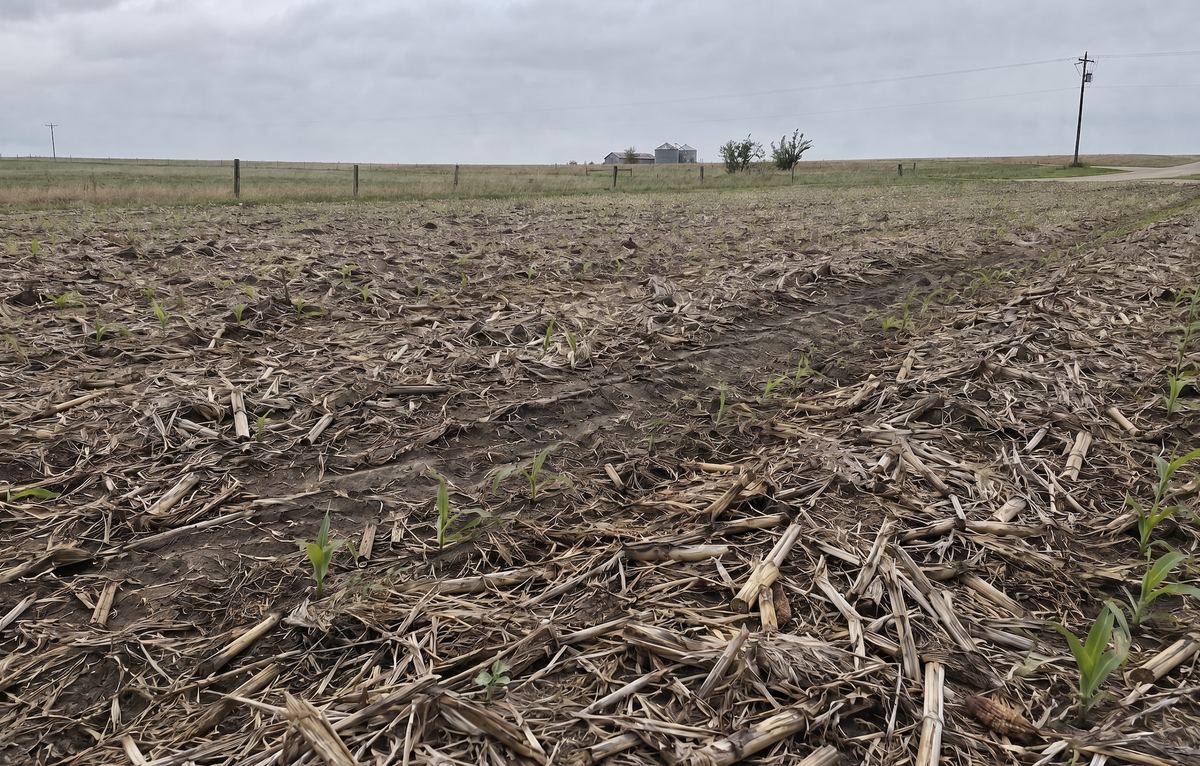
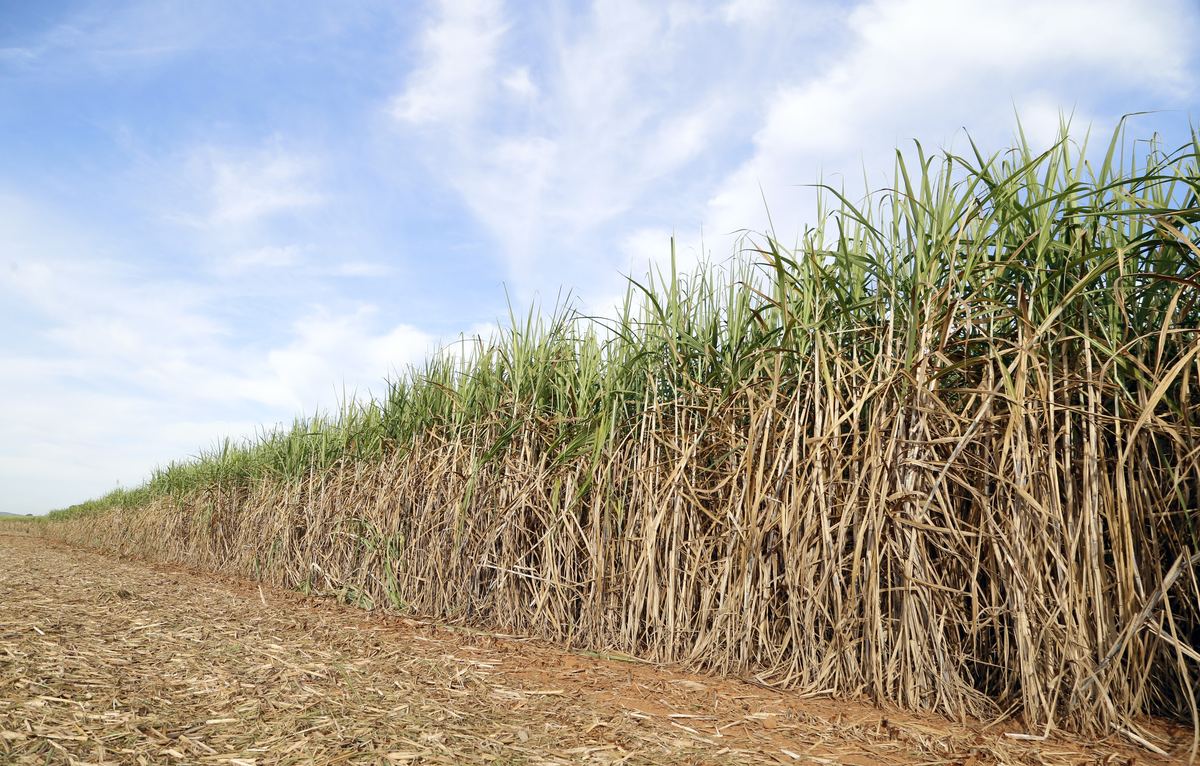
CRD works on any crop residue. The rate depends on residue load, not the crop: 20 grams per acre on lighter residue, 40 grams on heavy loads. The residues it is most often used on:
Growers deal with heavy residue by burning it, running extra tillage passes, baling it off, or waiting. Burning loses the carbon and nutrients and is restricted in some states. Extra tillage costs fuel and time and breaks up soil structure. Baling removes the nutrients with the residue. Waiting means planting into a mat next spring. CRD is the biological option. The residue stays in the field, breaks down where it lies, and the nutrients and organic matter go back into the soil.
CRD works best when it is part of a chop-and-incorporate pass. Spray the residue right after it has been chopped with a stalk chopper, flail mower, or combine chopper-spreader, then lightly incorporate with a disk or vertical tillage pass. Freshly cut residue exposes more surface area for the microbes to colonize. Shallow incorporation mixes microbes, residue, and soil moisture together, which is where decomposition is fastest. Fall application after harvest gives the microbes the longest working window before planting. A spring application ahead of seedbed preparation is also effective.
CRD also goes on with a boom sprayer, backpack sprayer, or aerial application, or through an irrigation or fertigation system. In no-till and reduced-till systems, spray directly onto evenly spread residue and time the application ahead of rainfall or irrigation so the microbes wash into contact with the residue. Use enough spray volume for uniform coverage: a minimum of 10 gallons per acre by ground, or 3 to 5 gallons per acre by air. Use the higher product rate on heavy residue loads.
CRD is compatible with many liquid fertilizers and is commonly added to a fall fertilizer pass. Dilute the fertilizer to its final spray concentration before adding CRD to the tank. To hydrate the powder fully, shake it with a small amount of water in a closed container until it disperses, then add the mixture to the spray tank. Keep gentle but continuous agitation during application so the microbes stay evenly suspended.
Do not tank-mix CRD with fungicides. CRD contains live Trichoderma and Aspergillus fungi, so allow 7 days between a systemic fungicide and a CRD application, or 3 days for a contact fungicide. If a fungicide is applied within that interval, a second application of CRD is recommended to restore full activity. Herbicides pose much less risk to the microbes. Separate applications where practical. If a herbicide must be tank-mixed with CRD, the product remains effective, though initial activity may be slower.
Decomposition depends on residue moisture and soil temperature. Apply when residue is moist or ahead of moisture. The strains survive and work slowly from about 45°F (7°C), pick up speed once soils pass 60°F (15°C), and work fastest between 68 and 95°F (20 to 35°C). The pH range is 4.5 to 9.5, with the best activity at 5.5 to 7.5. In practice that means a fall application right after harvest, while soils are still warm, gets more done before winter than one made late, and a spring application starts slowly and speeds up as the soil warms.
CRD is a dry powder at 100 billion CFU per gram of bacteria and 5 billion CFU per gram of fungi. It ships in 15 lb (6.8 kg) and 25 lb (11.3 kg) pails and 210 lb (95 kg) drums, with custom concentrations available on request. Shelf life is 6 months at room temperature and 18 months refrigerated. Store it cool, dry, and out of direct sunlight, and reseal the container after each use. The powder passes a 100-mesh sieve, so it runs through standard sprayers and irrigation systems.
CRD is sold direct by the manufacturer in sample sizes through bulk and wholesale quantities, with domestic and international shipping. It is available for private label and distributor supply, with custom CFU concentrations and packaging for qualified partners. Tell us your crop, acreage, and residue load, and we will recommend a rate and send a quote.
Concentration (CFU/g):
Custom concentrations available upon request
Packaging Options:
Shelf-life:
Storage Recommendations:
Application Guidelines:
| Residue load | Rate per acre | Rate per hectare | Spray volume | Typical residue |
|---|---|---|---|---|
| Standard | 20 g | 50 g | 10 gal/acre ground minimum; 3 to 5 gal/acre by air | Soybean, pulse, light small-grain residue |
| Heavy | 40 g | 100 g | 10 gal/acre ground minimum; 3 to 5 gal/acre by air | Corn stover, wheat and rice straw, cotton stalks |
Application:
Recommended Method (Chop and Incorporate):
Other Application Methods:
Application Notes:
Chemical Compatibility:
A crop residue decomposer is a microbial product you apply to stover, straw, and stubble after harvest so it breaks down faster in the field. CRD is a nine-strain blend of Bacillus, Trichoderma, and Aspergillus that colonizes the residue and digests the lignin, cellulose, and hemicellulose that make it slow to rot.
Four bacteria: Bacillus pumilus, Bacillus licheniformis, Bacillus subtilis, and Bacillus amyloliquefaciens. Five fungi: Trichoderma harzianum, Trichoderma longibrachiatum, Trichoderma asperellum, Aspergillus oryzae, and Aspergillus niger.
Yes. CRD breaks residue down biologically in the field, so the carbon and nutrients stay in the soil instead of going up in smoke. It is an option for growers in areas where residue burning is restricted or being phased out.
No. CRD is a microbial inoculant and is not registered for pesticidal use with the U.S. Environmental Protection Agency. It is intended to speed residue breakdown, not to control pests or disease.
The bacteria and fungi in CRD colonize the residue and produce the enzymes that break down its structural fibers. As the residue digests, the nutrients held in it release to the soil, the residue mat thins, and the remaining material becomes stable organic matter. Freshly chopped residue, moisture, and soil contact all speed the process.
20 to 40 grams per acre (50 to 100 grams per hectare), mixed with water or a compatible liquid fertilizer. Use 20 grams on lighter residue and 40 grams on corn stover, straw, and other heavy loads.
Yes. High-carbon residue immobilizes soil nitrogen while it breaks down. CRD speeds the carbon cycle so the residue digests before the next crop needs that nitrogen, which leaves more of it available during early growth.
Do not tank-mix CRD with fungicides. CRD contains live Trichoderma and Aspergillus fungi, so allow 7 days between a systemic fungicide and a CRD application, or 3 days for a contact fungicide. If a fungicide is applied within that interval, a second application of CRD is recommended to restore full activity. Herbicides pose much less risk to the microbes. Separate applications where practical. If a herbicide must be tank-mixed with CRD, the product remains effective, though initial activity may be slower.
Corn stover and grain stubble, wheat, barley, and rice straw, soybean and pulse residue, cotton stalks and sorghum stubble after shredding, cover crop termination residue, and residue in no-till and reduced-till systems. The rate depends on residue load, not the crop: 20 grams per acre on lighter residue, 40 grams on corn stover, straw, and cotton stalks.
Right after harvest, ideally as part of a chop-and-incorporate pass, so the microbes get the longest working window before planting. A spring application ahead of seedbed preparation also works. Apply when residue is moist or ahead of rain. The microbes work slowly from about 45°F (7°C) and speed up as soils pass 60°F (15°C), so an early fall application gets more done before winter.
Yes. CRD is compatible with many liquid fertilizers and is commonly added to a fall fertilizer pass. Dilute the fertilizer to its final spray concentration first, then add CRD.
Yes. Spray it directly onto evenly spread residue and time the application ahead of rainfall or irrigation so the microbes wash into contact with the residue. Incorporation is faster, but it is not required.
Boom sprayer, backpack sprayer, aerial application, or through an irrigation or fertigation system. Use at least 10 gallons per acre of spray volume by ground or 3 to 5 gallons per acre by air. Shake the powder with a small amount of water in a closed container until it disperses, then add it to the tank and keep gentle agitation running.
100 billion CFU per gram of bacteria and 5 billion CFU per gram of fungi in a dry powder. Custom concentrations are available on request.
15 lb (6.8 kg) pails, 25 lb (11.3 kg) pails, and 210 lb (95 kg) drums.
6 months at room temperature and 18 months refrigerated. Store it cool, dry, and out of direct sunlight, and reseal the container after each use.
Yes. CRD ships in sample sizes through bulk and wholesale quantities, with domestic and international shipping, and is available for private label and distributor supply with custom CFU concentrations and packaging for qualified partners.
Contact our sales team with your crop, acreage, and residue load. We will recommend a rate and send pricing.