
- Products
- Overview
- Product Forms / Packaging
- Plant Health
- Wastewater
- Livestock Waste
- Aquaculture & Ponds
- Petroleum & Grease
- Case Studies
- Buy
- About
- Contact

In a China greenhouse strawberry trial over the December to February winter season, Sunrise Soil Probiotic, an OMRI Listed and CDFA registered microbial biofertilizer, lifted fruit count 24% (202 to 251 berries per plant, and 34% at the January peak) and held Brix above 10.7 all season while the untreated control fell to 9.64.
| Metric | Untreated control | Sunrise treated |
|---|---|---|
| Fruit per plant (3-month total) | 202 | 251 (+24%) |
| January fruit per plant | 79 | 106 (+34%) |
| Brix, December | 10.72 | 11.22 |
| Brix, February | 9.64 | 10.71 |
| Canopy and fruit set | Thinner, weaker | Denser, heavier set |
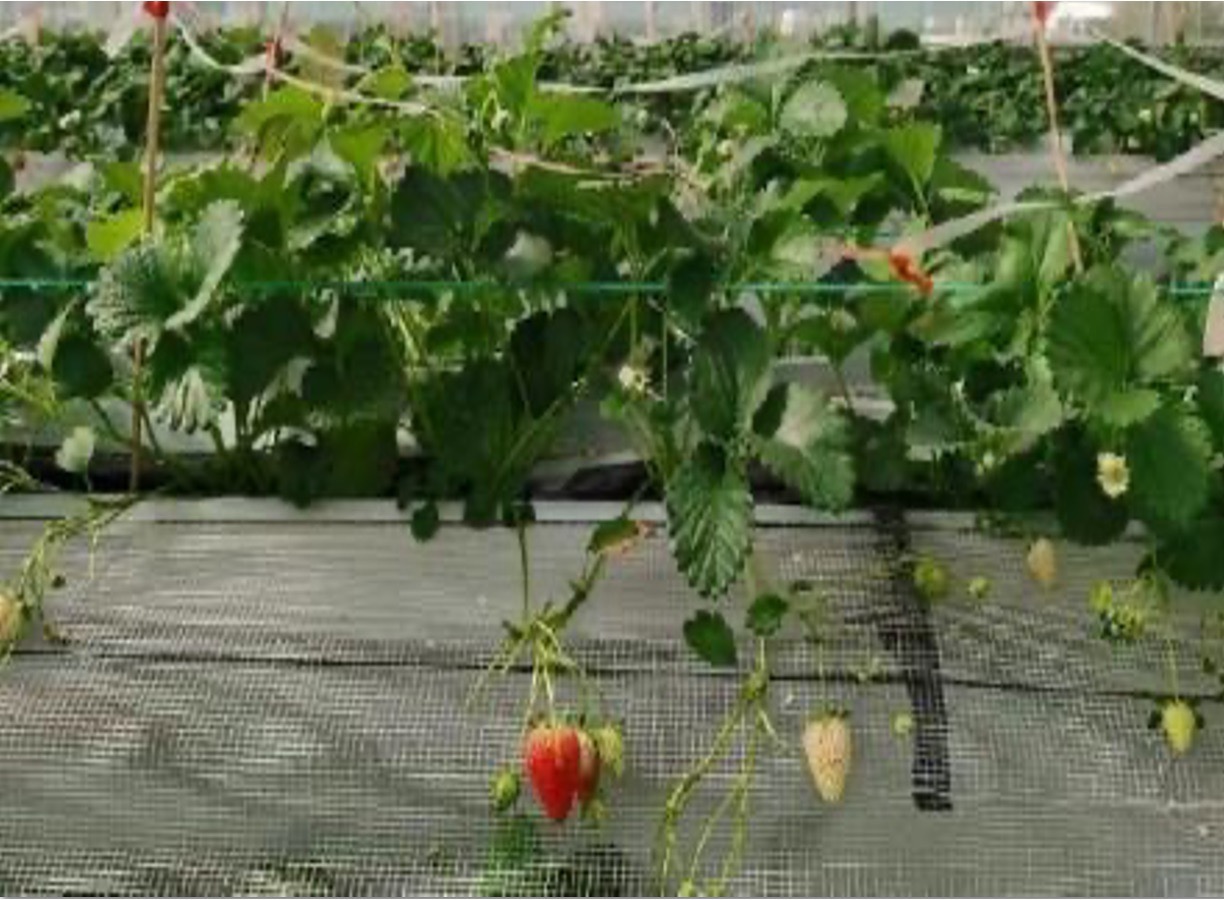
Untreated control: 202 strawberries per plant over the season, with Brix sliding from 10.72 to 9.64 and a thinner, less vigorous canopy.
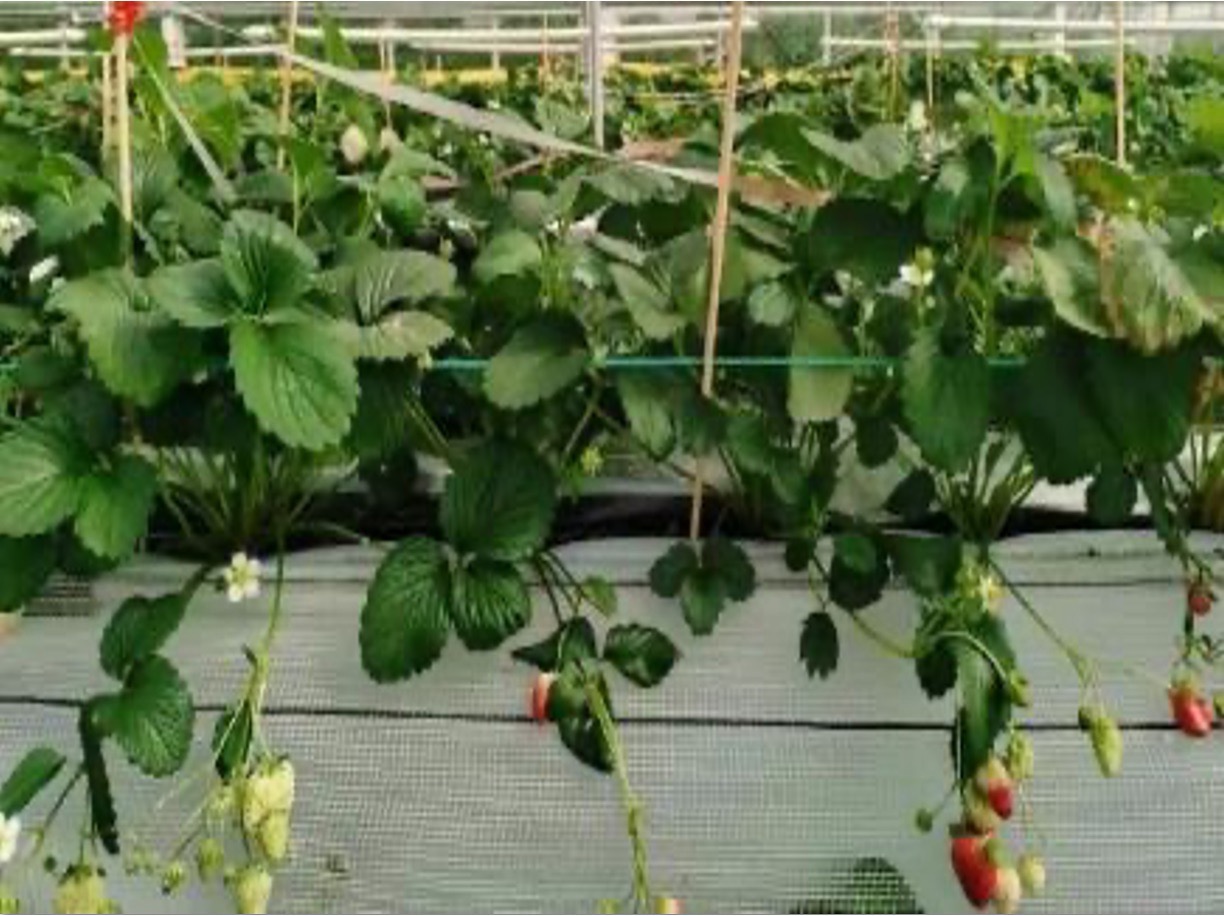
Sunrise treated: 251 strawberries per plant, 24% more, with Brix held above 10.7 all season and a denser canopy carrying heavier, market-ready fruit.
The strongest results come from pairing your base fertility program with a biological input that improves nutrient uptake. In this China greenhouse trial, adding an OMRI Listed microbial biofertilizer to the same fertilizer program lifted fruit count 24% and held Brix higher all season versus an untreated control.
Yes. In a head-to-head greenhouse trial, strawberries treated with Sunrise produced 251 berries per plant against 202 in the untreated control, a 24% increase over the season, with a 34% gain at the January peak. The beneficial bacteria and fungi improve nutrient availability and root uptake, so plants set more fruit.
Sweetness depends on how efficiently the plant takes up and moves nutrients late in the season. Treated plants here held Brix above 10.7 from December through February, while the untreated control fell from 10.72 to 9.64, about a full Brix point of extra sweetness sustained every month.
Yes. Sunrise Soil Probiotic is an OMRI Listed and CDFA registered microbial biofertilizer, so it fits organic production systems and specialty programs. It adds beneficial bacteria and fungi rather than synthetic inputs, and in this trial it improved both yield and fruit quality.
In this trial the treated zone set 24% more fruit per plant over three months and 34% more at peak harvest in January. Actual gains depend on variety, system, and program, but the trial shows a clear yield lift from adding the microbial biofertilizer.
Sunrise is a microbial inoculant worked into the existing fertility and irrigation program, colonizing the root zone so the bacteria and fungi stay active through the season. It is applied alongside your normal fertilizer rather than replacing it.
Yes. This trial ran in an elevated tabletop greenhouse, where the treated zone outperformed the untreated control on both fruit count and Brix. The microbes colonize the root zone in container and tabletop media just as they do in field soil.
That is exactly how it was tested here. Both zones ran the same base fertility program and only the treated block received Sunrise, so the 24% fruit gain and higher Brix came from adding the biofertilizer on top of the grower's normal fertilizer, not from changing it.
This is the product behind these results. Open its page for full specifications, packaging, and dosing rates.
Tell us your system size and current numbers. We will recommend a starting dose and send a quote.
Request a Quote


