
- Products
- Overview
- Product Forms / Packaging
- Plant Health
- Wastewater
- Livestock Waste
- Aquaculture & Ponds
- Petroleum & Grease
- Case Studies
- Buy
- About
- Contact

At a commercial restaurant in Colombia, one Grease Treat tablet a month cleared heavy FOG buildup and eliminated grease trap odor within 90 days, letting the kitchen extend pump-outs and cut maintenance.
| Metric | Before | After 90 days |
|---|---|---|
| Surface FOG | Thick grease, hardened deposits | Minimal accumulation |
| Odor | Strong (VFA and H2S) | None detectable |
| Solids buildup | Visible across trap | Substantially reduced |
| Pumping frequency | Frequent, rapid re-buildup | Extended intervals |
| Dosing effort | Repeated cleanouts | 1 tablet per month |
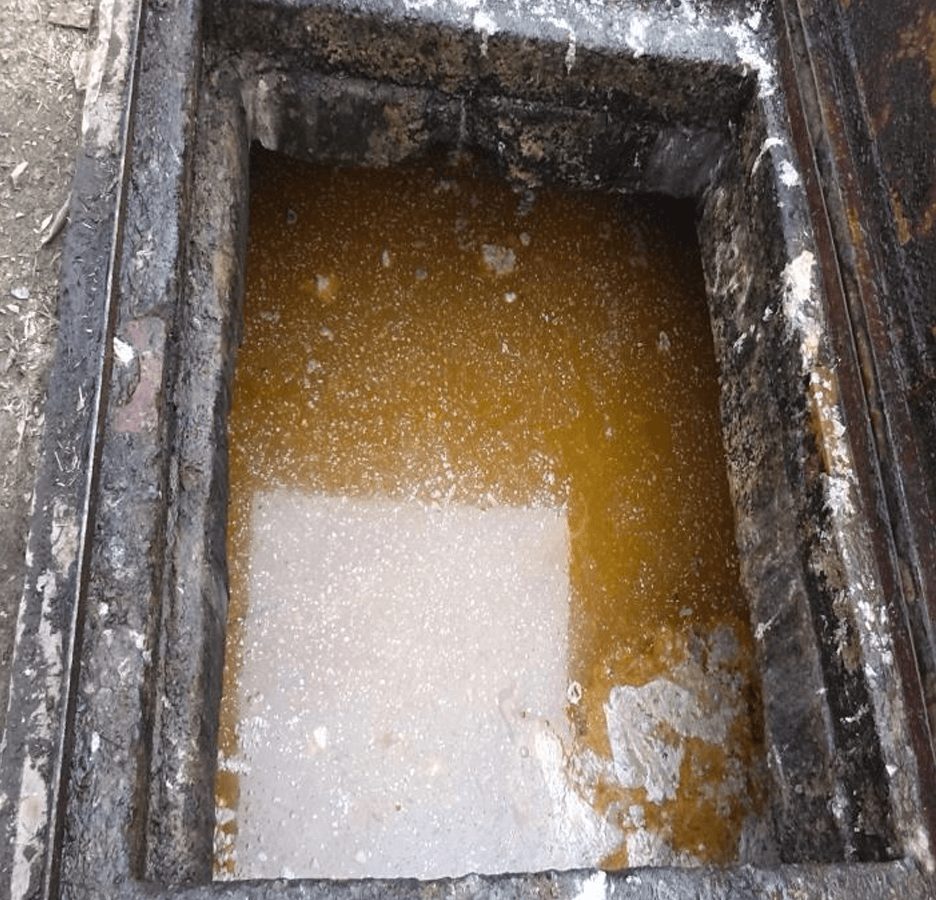
A busy restaurant grease trap in Colombia was packed with fats, oils, and grease. Thick surface grease and hardened FOG lined the walls, solids built up across the trap, and the whole thing gave off a strong odor that reached the kitchen and the neighbors.
Cleanouts did not hold. Within days of each service the grease was back, so the restaurant kept paying for frequent pump-outs and still fielded odor complaints. They needed a low-effort way to keep the FOG down at the source without changing how the kitchen worked.
The trap went on a simple Grease Treat program: one tablet a month, dropped at the inlet so it meets the incoming fats, oils, and grease first. The tablet releases high-CFU FOG-digesting bacteria that break the grease down inside the trap instead of letting it cake on the walls and float as scum.
Nothing about the kitchen routine changed. The only new step was replacing one tablet each month over the 90-day trial.

Before: thick surface grease and hardened FOG line the trap walls, with strong odor and solids that rebuild within days of every cleanout.
During treatment: with one Grease Treat tablet a month at the inlet, the grease layer softens and thins and the odor starts to fade.

After 90 days: the trap runs visibly clean with minimal grease, no detectable odor, and long enough between pump-outs to cut hauling cost.
The grease layer softened and thinned as the bacteria took hold, and the smell was the first thing to go as the volatile fatty acids behind it were digested. Surface scum kept dropping month over month.
By 90 days the trap looked visibly clean, with minimal grease and no detectable odor. Grease came back so much slower between services that the restaurant could stretch the time between pump-outs and lower hauling cost, all from a one-tablet-a-month habit.
Each tablet releases high-CFU FOG-digesting bacteria at the trap inlet, right where fresh fats, oils, and grease come in. The bacteria break the grease down inside the trap instead of letting it harden on the walls or float as scum, so the buildup keeps dropping instead of returning between cleanouts.
Usually, yes, and it is often the first thing to improve. Most grease trap odor comes from volatile fatty acids and hydrogen sulfide as trapped grease turns septic. As the bacteria digest that material, the odor source goes away; in this restaurant the smell was gone by the end of the trial.
One tablet a month, dropped at the inlet. Improvement is gradual: the grease softens and the odor fades over the first weeks, and this trap was visibly clean by 90 days. Heavier grease loads can take a little longer.
Yes. It is a biological product that works on the organic grease and solids, and it is used routinely in grease traps and lines. There are no caustic or acidic drain chemicals involved, so it will not attack the trap or your plumbing.
Often, yes. When grease is digested instead of accumulating, it comes back far slower between services, so many operators can stretch the interval between pump-outs and cut hauling cost. Your results depend on your grease load and trap size.
Restaurants, food courts, and commercial or institutional kitchens running a grease trap, especially any site dealing with recurring odor complaints or frequent pumping. The one-tablet-a-month routine keeps it simple.
This is the product behind these results. Open its page for full specifications, packaging, and dosing rates.
Tell us your system size and current numbers. We will recommend a starting dose and send a quote.
Request a Quote


