Case Study

Colombia Mustang III Turfgrass Trial: 100% Germination by Day 9 and 30% Taller Turf with a Trichoderma Turf Inoculant

In a Mustang III turfgrass trial in Colombia, Multi-Tricho, an OMRI Listed multi-strain Trichoderma inoculant of beneficial soil fungi, reached 100% germination by day 9 against 22% in the untreated control, and grew turf to 9.2 cm by day 24 against 7.1 cm untreated, a 30% gain in early height. Every plot ran the same Steiner nutrient solution, leaving the Trichoderma inoculant as the only differing input.

100%
grass germination by day 9
30%
taller turf by day 24
22%
untreated germination, day 9

Results at a glance

MetricUntreated controlMulti-Tricho treated
Germination, day 922%100%
Germination, day 1070%100%
Turf height, day 247.1 cm9.2 cm (+30%)
Dose responsen/aDouble rate fastest at every reading

The challenge

Turf is judged on how fast and how evenly it comes in. A sod producer, a golf course superintendent, or an athletic field manager loses margin on every extra day a stand takes to establish, and on every thin patch that has to be overseeded a second time. The difference between turf that finishes germinating on day 9 and turf still filling in past day 10 is a full turn of the production cycle. This Colombia trial set out to answer two questions on Mustang III turfgrass: whether a Trichoderma inoculant speeds up grass germination and early growth during turf establishment, and whether a higher application rate delivers more than a lower one. Control plots received water only, and every plot in the trial ran the same Steiner nutrient solution, so nutrition was held constant across the board.

What we did

Mustang III turfgrass was seeded and split into three groups: an untreated control on water only, a low rate of Multi-Tricho at 5 grams per hectare per week, and a double rate at 10 grams per hectare per week. Multi-Tricho is an OMRI Listed inoculant built from three Trichoderma species, Trichoderma harzianum, Trichoderma longibrachiatum, and Trichoderma asperellum, beneficial soil fungi that colonize the root zone and root surfaces, where they cycle nutrients and support root development. The powder is water soluble, so it went out through irrigation once a week across the establishment cycle. All three groups received the same Steiner nutrient solution. Germination was counted daily from day 7 through day 10, and plant height was measured daily from day 14 through day 24, which isolated the inoculant as the only input that changed.
This is some text inside of a div block.
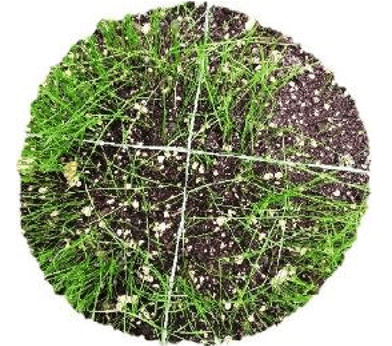
Untreated control: Mustang III turfgrass on water and standard nutrition only, 22% germinated at day 9 and a thin, patchy stand.
This is some text inside of a div block.

Untreated control: Mustang III turfgrass on water and standard nutrition only, 22% germinated at day 9 and a thin, patchy stand.

This is some text inside of a div block.
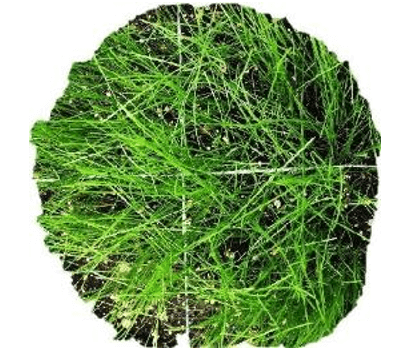
Multi-Tricho treated: the same turfgrass at the higher rate, 100% germinated by day 9 with an even, dense stand and 30% more height by day 24.
This is some text inside of a div block.

Multi-Tricho treated: the same turfgrass at the higher rate, 100% germinated by day 9 with an even, dense stand and 30% more height by day 24.

The results

The double rate reached 100% germination on day 9. The low rate got there on day 10. The untreated control stood at 22% on day 9 and had still only reached 70% by day 10, when both treated groups were already fully germinated. Early growth ran in the same order. By day 24 the double-rate turf measured 9.2 cm against 7.1 cm untreated, a 30% gain in height, with the low rate close behind at 9.0 cm. Pulled side by side against a ruler, the treated plugs carried noticeably more shoots and heavier root mass than the control. The dose response held at every single reading from day 7 to day 24: more inoculant, faster and more even turf establishment. For sod producers, golf course superintendents, athletic field managers, and anyone overseeding into a thin stand, that shorter and more uniform establishment window is where the input pays.

The data

Germination rate, day 9
%
22
100
100% germination by day 9 at the higher rate, against 22% in the untreated control
Turf height, day 24
cm
7.1
9.2
30% taller turf by day 24, 9.2 cm treated against 7.1 cm untreated
This is some text inside of a div block.
Download the complete case study (PDF)

Frequently asked questions

What helps grass seed germinate faster?

Moisture, soil temperature, and seed-to-soil contact set the floor, but root-zone biology moves the number too. In this Mustang III trial, plots treated weekly with a multi-strain Trichoderma inoculant were 100% germinated by day 9, while untreated plots on the same nutrition sat at 22% and had still only reached 70% on day 10.

How do you make grass grow faster and thicker?

Speed and density come from getting more seed up at the same time and getting roots working early. The treated turf here finished germinating a full day or more ahead of the control and reached 9.2 cm by day 24 against 7.1 cm untreated, a 30% height gain, with visibly more shoots per plug in the side-by-side pull.

Does Trichoderma improve turf germination and establishment?

That is what this trial measured. Trichoderma species colonize root surfaces and the surrounding rhizosphere, where they cycle nutrients and support root development. Applied weekly to Mustang III turfgrass, they cut the time to full germination and raised early height 30% over an untreated control running the identical nutrient solution.

Is there an organic turf inoculant for overseeding and new lawns?

Multi-Tricho is OMRI Listed, so it fits certified organic and regenerative turf programs. It is a water-soluble powder of naturally occurring beneficial soil fungi that goes out through irrigation, which makes it practical on new seedings, sod production, and overseeding into an established stand.

How and when do you apply a biological inoculant during turf establishment?

In this trial it went out once a week through irrigation across the whole establishment cycle, starting with the seeding. Applying to moist soil and staying on a weekly schedule gives the fungi time to colonize the root zone while the seedlings are putting down their first roots, which is when the difference shows up.

Does a higher application rate work better?

In this trial, yes, and the gap was consistent. The double rate of 10 grams per hectare per week beat the 5 gram rate at every single reading from day 7 through day 24, reaching full germination on day 9 versus day 10 and finishing at 9.2 cm against 9.0 cm. Both rates beat the untreated control by a wide margin.

Can it be used on sod farms, sports fields, and golf course turf?

Yes. The water-soluble format passes through irrigation, so it scales from trial plots up to sod fields, athletic fields, and golf course turf without new equipment. The shorter, more even establishment window is worth the most in production settings where a stand has to be ready on a schedule.

Does a Trichoderma inoculant replace turf fertilizer?

No, and this trial was not set up as a fertilizer comparison. Every plot, treated and untreated, received the same Steiner nutrient solution. The inoculant works on how efficiently the turf uses the nutrition already applied, which is why it is added on top of an existing fertility program rather than in place of one.

multi-tricho

Product used in this trial

This is the product behind these results. Open its page for full specifications, packaging, and dosing rates.

Trial vs control

Have a lagoon or waste system with the same problem?

Tell us your system size and current numbers. We will recommend a starting dose and send a quote.

Request a Quote